Report on the 2019 Teilhard Seminar at Durham University, UK
In February 2019, the Centre for Catholic Studies (Durham University) presented its Annual Teilhard Seminar – the second annual seminar made possible by the generous support of the British Teilhard Network.
The 2019 seminar, attended by around 60 people from the University and locality, was given by one of the most prolific scholars in the contemporary ‘religion and science’ conversation, Professor Celia Deane-Drummond (University of Notre Dame and honorary fellow at Durham University).

Prof. Deane-Drummond has been a particularly influential contributor in this field and in this seminar we were given an exciting insight into her forthcoming trilogy The Evolution of Wisdom. The paper offered at the seminar gave us a taste of Deane-Drummond’s approach to one of the most perplexing and challenging dimensions of theology’s reception of evolutionary science: the place of violence, casual or systematic, in evolutionary history, and the significance of that for both morality and religion.
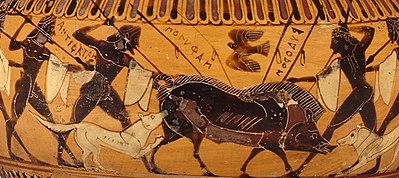
Deane-Drummond set the stage by outlining the divergent views of Thomas Hobbes and Jean-Jacques Rousseau regarding the “state-of-nature” at the dawn of human life: was it one of originary violence or originary peace? Bringing this exchange into critical conversation with contemporary work in ethology, Deane-Drummond surveyed the theological significance of contemporary studies of primate behaviour. Importantly, she noted that this literature reveals tendencies both to violence and reconciliation among our closest primate ancestors – chimpanzees and bonobos. Drawing on evolutionary anthropology and anthropologies of violence, she argued that organised violence in the form of intentional warfare behaviours is characteristic only of human societies, and is intrinsically linked to our capacity for symbolic representation. This has the interesting consequence that a straight line cannot easily be drawn between hunting practices and full-fledged warfare. She also cast in critical light the too-easy identifications of ‘religion’ as a driving force in the evolution of warfare. Ultimately refusing an easy binary between the two visions of Hobbes and Rousseau, she ably demonstrated how important it is to resist simplistic moral or theological narrations of ‘violence’ in evolutionary history.
As was enthusiastically noted in the lively discussion at the end of the paper, Deane-Drummond’s approach was striking for its intellectual catholicity, drawing on multiple different types of literature and disciplinary languages and perspectives. She not only showed her own command of a wide range of disciplinary debates, but also exemplified the Teilhardian understanding that the natural-scientific, humanitarian and theological modes are mutually illuminating. At the same time, the paper evinced a cautious critical mind-set too-often absent from the science-religion conversation in demonstrating that theology generates crucial critical perspectives on scientific narratives.
The paper was based on a working draft of a chapter that is in preparation as part of the second volume of a three volume trilogy, The Evolution of Wisdom, (Oxford University Press). The first volume (forthcoming in 2020) is entitled The Evolution of Wisdom Volume 1: Theological Ethics Through a Multispecies Lens and, the second, The Evolution of Wisdom Volume 2: Shadow Sophia.
Dr. Carmody T. Grey
The Annual Teilhard Seminar is presented as part of the Centre for Catholic Studies’ Catholic Theology Research Seminar Series. This seminar series is a forum for scholarly discussion of pertinent issues in the Catholic traditions of theology and Church; it ranges across the traditional theological disciplines (scriptural, historical, philosophical, systematic, liturgical, ethical and practical/pastoral), Catholic social thought and practice, and social-scientific approaches to Catholicism. Many previous seminars, including the Inaugural Teilhard Seminar by Simon Oliver, are available to listen to via the Centre for Catholic Studies website.